We Believe | A Documentary About the Cubs' 2008 Season
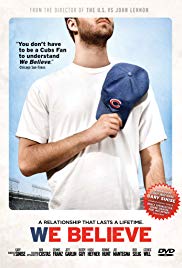
This was the official website of the 2009 film, We Believe, about the Cubs' 2008 season. It documents that eternal bond between the team and the fans. Such prominent Cubs fans as Billy Corgan, Dennis Franz and Jeff Garlin were featured. The documentary is narrated by Gary Sinise. TNG/Earthling handled archiving oversight for this restored version of the original website. A huge baseball fan, CEO Bob Sakayama was responsible for development and SEO. Rev Sale handled research and content preservation.
Content is from the site's 2009 archived pages as well as from other outside sources.
A Must See for all Cub fans!
We Believe Trailer 2009
WE BELIEVE celebrates the extraordinary love affair between Chicago and its Cubs. It is a powerful, passionate and uplifting film about America, family, faith, loyalty and tradition. First and foremost, We Believe is an entertaining movie, jam-packed with humor, heart, emotion and unique insight, and featuring super-rare and never-before-seen vintage footage (including the first-known film of a Cubs game from 1909 and of Chicago shot by Thomas Edison in 1897), amazing newly-shot images of Chicago and Wrigley Field, and an incredible soundtrack. It is a must-have film for everyone who loves their city and their team.
ABOUT THE PRODUCTION
In December of 2007 director John Scheinfeld (“THE U.S. vs. JOHN LENNON”) and producer Tim McGuire met with Cubs officials to pitch them on the idea of doing a documentary film about the extraordinary love affair between the team and its fans. Although initially reluctant to participate in any film project, team executives were impressed by the work previously done by Scheinfeld and his team as well as the project’s overall creative vision. Within weeks they committed to participating in the production and provided extraordinary access to players, Wrigley Field and the team’s archive.
Production began in February 2008 when Scheinfeld and Director of Photography/Producer Richard Christian (Sedgwick Productions) flew to Mesa, Arizona to shoot Cubs Spring Training. The club gave them access to 8 starting players. 3 separate interviews were shot with each – one in Spring Training, one at the All-Star Break and one after the season was over. In this way, the filmmakers were able to secure intimate, in-depth interviews as in which they express their thoughts on a wide array of topics. In the process, they reveal a side of themselves previously unseen by most viewers – they are caring, thoughtful, down-to-earth people.
"We Believe: The Movie" Director John Scheinfeld on The Interview Show (Part Two)
During the 9-month shooting schedule the filmmakers shot more than 220 hours of footage, including more than 14 games at Wrigley, The result is compelling and visually striking movie that showcases many neighborhoods within the city of Chicago, seamlessly blended with timeless and beautiful images of legendary Wrigley Field, including the nooks and crannies unseen by most people.
During the summer of 2008 in Chicago at Cutters, Editor/Producer Chris Claeys began screening the raw footage, meticulously logging each shot and making copious notes about how best to use the material. Once the season was over, Scheinfeld began writing the script. It took eight weeks to complete and then the editing process began. From December of 2008 through late April of 2009 Claeys and assistant editor Betty Jo Moore, in collaboration with Scheinfeld, assembled, edited, shaped and polished the film.
Throughout the production Scheinfeld and associate producers Robert Bader and Kathleen Ermitage cast a wide net to locate the rarest and most unusual audio/visual material for inclusion in the film. Film and photo archives around the country were scoured for material. Trips were made to our nation’s capitol where rare and unseen film and photos were found in the Library of Congress and National Archives. Local museums, ethnic libraries and neighborhood associations were also contacted.
Numerous visits were made to the homes of collectors all over the city who gladly contributed treasured photos, game programs and other memorabilia to the production. Important photos were supplied by the Chicago History Museum, the University of Illinois-Chicago, the University of Wisconsin and the Marnan Collection. Among the many treasures this hunt uncovered is the first known motion picture footage of a Cubs game. Originally shot in 1909 it never appeared in any film and remained buried in an archive on the East Coast until it was discovered by the WE BELIEVE team. Another visual treat is color footage of a 1938 World Series game at Wrigley. Researchers also uncovered exciting Cubs game footage shot at Wrigley field in 1923, 1927, 1929, 1932 and 1935.
To personify the relationship between the city and team, a “Cubs Love Stories” promotion was organized with WGN Radio. In just 10 days over 500 entries were received from couples how they met at a Cubs game and how that meeting significantly influenced their lives. The contest winners, Sue and Chris Jones, are featured in the film. Additionally, there is a moving and emotional storyline devoted to Chicago singer-songwriter Steve Goodman, a man whose connection to the city and the Cubs was intensely deep. Die-hard Cubs fan Goodman is best known for writing the classic, “City of New Orleans,” a massive hit for Arlo Guthrie in the 70s and Willie Nelson in the 80s. His songs have been performed by Joan Baez, Jimmy Buffett, Johnny Cash, Judy Collins, Kris Kristofferson and Peter, Paul and Mary. At the age of 21 Goodman was diagnosed with leukemia and told he had only a few years to live. Amazingly, he beats death for 15 years. Prior to his death in 1984, Goodman wrote two songs expressing his love for the Cubs – “A Dying Cub Fan’s Last Request” and “Go Cubs Go,” a song played at Wrigley Field after every home victory. More than anything he wanted to see the Cubs make it to the playoffs for the first time since 1945. What happened makes for a compelling and poignant end of his through-line in the film.
Spectacular graphic sequences were created by Chicago’s own Sol Design under the supervision of Neal Cohen. Highlights include amazing recreations of the devastating Chicago Fire of 1871 and the historic “Merkle Game” between the Cubs and the New York Giants in 1908.
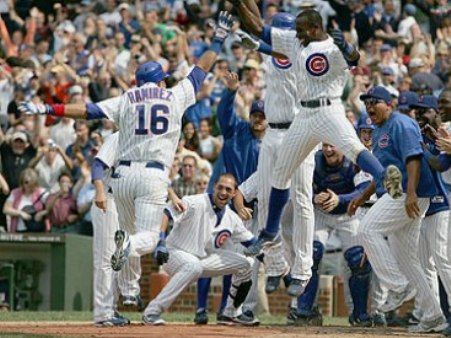
In an effort to further involve the community in the production of the film, Chicago area musicians and bands were offered an exciting and unique opportunity to compete to have their original recording of a song about Chicago and/or the themes embodied by the film. “This film is about our community and the Cubs and we believe this competition will generate some interesting participation,” Scheinfeld said. “Chicago’s music scene has an incredible abundance of talent and we hope to showcase it,” he added. Cubs’ fans around the world began casting their vote online for their favorite song on February 28, 2009. The winning song, “Waltz in the Ashes” by Inchworm, was prominently featured in a segment of the film.
Another initiative instituted by WE BELIEVE is that Cubs fans around the world were offered an opportunity to include their own name or that of a loved one in the closing credits of the film. This is the cinematic equivalent of the classic bricks laid in front of Wrigley Field. A portion of the proceeds were donated to charity.
WE BELIEVE is a love story about Chicago and its baseball team and with every love story there is bound to be some heartbreak. So, without a big, happy Hollywood ending in which the Cubs win the World Series for the first time since 1908, the creative team rose to the challenge, employing Bruce Springsteen’s anthemic “Land of Hope and Dreams,” to drive the film to a powerful, emotional, inspiring finish. After all, it’s the journey that’s important, not the destination.” Chicago composer Steve Ford worked 24/7 to write a powerful original score for WE BELIEVE. It was recorded in his Clark Street studios by engineer Colin Sipos with talented local musicians (yes, LIVE musicians were employed in the making of this film!). Sound for the entire movie was then mixed and designed by John Binder of Chicago’s Another Country in time for the incredible World Premiere in June 2009 at the historic Chicago Theatre.
The production of WE BELIEVE is totally homegrown. Financing was provided by local Chicago investors who love their city and team. The Producers and production staff are Chicagoans, the film was shot by an award-winning Chicago production company (Sedgwick Productions), edited by the city’s finest editor at one of the city’s top post-production facilities (Cutters) and the Director/Writer/Producer is Chicago-born and a graduate of Northwestern University.
True Believers
See the premiere of "We Believe," a documentary about the Chicago Cubs By Wendy Wollenberg Published Jul 14, 2009 / www.nbcchicago.com
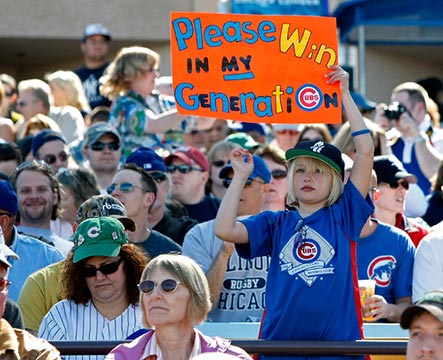
True loyalty knows no age limits.
Lovable losers or not, the Chicago Cubs have the most loyal fans in all of baseball. See the premiere of a feature film documentary outlining this long-lasting love affair at the Chicago Theatre on Friday, June 12. "We Believe: Chicago and its Cubs" is set against the 2008 MLB season, which just happened to have marked the 100th anniversary of the last Cubs' World Series win.
Director John Scheinfeld (who was also behind "The U.S. vs. John Lennon," a documentary about the musician's antiwar activism) plumbs the depths of the typical Cubs fan's psyche during "We Believe" in an attempt to explain the mystical attraction between Chicago and its Cubbies.
The film was produced with full cooperation from the team and Major League Baseball, the first theatrical documentary to be granted this authorization. The uplifting saga includes interviews with such Cubs legends as Ernie Banks and Ron Santo, current players and management and celebrity fans such as Hugh Heffner, Bonnie Hunt and Billy Corgan.
The premiere will take place at the Chicago Theatre at 10:30PM on Friday, June 12 and is sponsored by -- surprise, surprise -- Budweiser. Tickets are $6-$25 (way cheaper than bleachers seats).
FEATURING
Roger Baird – Head Grounds Keeper, Wrigley Field
Ernie Banks -- Cubs Legend
Al Bunetta -- Manager/Friend of Steve Goodman
Billy Corgan – Musician/Cubs Fan
Bob Costas – Broadcaster
Richard M. Daley – Mayor of Chicago
Ryan Dempster -- Chicago Cubs
Mark DeRosa -- Chicago Cubs
Dennis Franz – Emmy Award winning actor/Cubs Fan
Kosuke Fukudome -- Chicago Cubs
Denny Garkey -- Founder, Little Cubs Field
Judy Garkey -- Little Cubs Field
Jeff Garlin – Comic, Actor/Cubs Fan
Francis Cardinal George, OMI
Nancy Goodman Tenney – Wife of Steve Goodman
Jordan Grafman, PhD -- Senior Investigator, National Institutes of Health
Buddy Guy -- Musician
Hugh Hefner -- Founder and Editor-in-Chief, Playboy Magazine
Jim Hendry -- General Manager, Chicago Cubs
Bonnie Hunt – Actress/Cubs Fan
Chris Jones -- Cubs Fan
Sue Jones -- Cubs Fan
Crane Kenney -- Chairman, Chicago Cubs
Rick Kogan – Newspaperman, Chicago Tribune
Derrek Lee -- Chicago Cubs
Ted Lilly -- Chicago Cubs
Joe Mantegna – Tony Award Winning Actor/Cubs Fan
Cait Murphy -- Author, “Crazy ‘08” (“…the greatest year in baseball history.”)
Lou Piniella -- Manager, Chicago Cubs
Ryne Sandberg – Cubs Legend
Ron Santo -- Cubs Legend/Broadcaster
Bud Selig -- Commissioner of Major League Baseball
Matt Sinatro -- Coach, Chicago Cubs
Geovany Soto -- Chicago Cubs
Steve Stone -- Broadcaster
Ryan Theriot -- Chicago Cubs
Alan Trammell -- Coach, Chicago Cubs
Scott Turow – Best Selling Author
Fred Washington – Groundskeeper, Wrigley Field
Michael Wilbon -- Broadcaster/Columnist
Tim Wiles -- Baseball Hall of Fame
George Will – Author/Columnist
Billy Williams -- Cubs Legend
Kerry Wood -- Chicago Cubs
A film about hope, faith and Cubs fans
April 3 2009 | By Steve Johnson, TRIBUNE CRITIC | www.chicagotribune.com/
It would have been perfect.
The Cubs finally end the futility with a World Series victory in the season marking the 100th anniversary of their last series win. A film crew is there to capture it all, ready to transfer to the big screen the magical tale of faith long suffered and finally rewarded.
It would have been perfect, but it wouldn't have been the Cubs. Finishing the century season with the best record in the National League, they lost in the first round of the playoffs, three games to none. A film crew was there, anyway.
"Yes, we would have liked the great big happy Hollywood ending," says John Scheinfeld, currently putting the finishing touches on his feature-length Cubs documentary. "But as Bob Costas said to me when I interviewed him after the season, he said, 'You know, in many ways this is a more Cub-like ending.'"
The film, which will premiere June 12 at the Chicago Theatre, is called "We Believe," arguably the most detailed and ambitious of the Cubs documentaries that have been made to date. The words in the title will have to continue to carry the implied asterisk.
We Believe, In Spite of Everything.
We Believe, Though It Probably Would Be Easier If We Didn't.
We Believe, Aren't We the Fools?
Working at an editing company on North State Street, Scheinfeld -- who won acclaim for "The United States vs. John Lennon" -- has been cutting his movie since December and worrying, a little, about one question: "Given what happened in October," he says, "how do I end it in a way that people aren't going to want to go out and slit their wrists? I think I've found a way to do that."
He won't specify, except that he does plan to go out on Bruce Springsteen's "Land of Hope and Dreams." It surely helps that the film was never designed to be a season-in-the-life sports chronology. Instead, in the half-dozen segments I've seen during a couple of interviews, it plays like a valentine to the team, its city and the undeniably special relationship between the two, however maddening that may be to Sox fans.
"It's set against the landscape of the 2008 season, but it isn't really about that," Scheinfeld says.
So helicopters soar over Wrigley and Chicago. Cameras, which would gather more than 220 hours of footage, poke into the field's nooks and crannies. Vintage Cubs film gets new life. Frank Sinatra sings exactly the song you would expect, but, to Scheinfeld's credit, Ronnie Wicker and his exasperating wheeze will be nowhere in sight.
Bonnie Hunt talks about Chicago as "a giant Mayberry." George Will credits Chicagoans' capacity for optimism to their prairie location. Joe Mantegna wonders what would have happened if his parents had been Yankees fans instead.
To set it apart from previous Cubbie homages, there are also plenty of less well-known fans, local writers, the members of Cubs management who, along with Major League Baseball, approved the project. Scheinfeld interviews eight players -- Ryan Theriot, Mark DeRosa, Kerry Wood, Geovany Soto, Ryan Dempster, Derrek Lee, Ted Lilly and Kosuke Fukudome -- at various points during the year and gives each a sort of chapter.
And the filmmaker talked to Roman Catholic Cardinal Francis George, thinking he'd get some general thoughts on the nature of faith that he could tie to the Cubs in the editing room. Instead, he got the very specific thoughts of a lifelong Cubs fan who is, therefore, an expert on the subject twice over.
As he recounts that interview, in the same January week in which it took place, Scheinfeld has the glow of a man looking at a gold nugget in his pan:
"Cardinal George said it's not dissimilar to eschatological faith, which is sort of 'next year in Jerusalem.' It's sort of, 'Jesus will be coming back at one point.' He said, 'We know it's going to happen, but we don't know when.'"
In other words, wait till next year is as applicable in the pews as it is in the bleachers.
"We were skeptical at first," says Crane Kenney, the Cubs chairman. "John's first meeting with me, I just said, 'No way.' We took the position that we're not in the business of granting anyone access for movie efforts."
But Scheinfeld had local ties. He grew up in Highland Park to age 6, earned a master's degree from Northwestern's radio/television/film department. He and Kenney had friends in common. He had made, as the crowning project to date in a long career, the well-received Lennon film, and Kenney was impressed by the way Scheinfeld "developed Lennon as a full person, some negative, some positive, but certainly human."
The filmmaker wanted to make the movie in Chicago, working with local crews and a local editor, rather than be, as he says, "a Hollywood carpetbagger."
And he was persistent. Scheinfeld recalls pointing to a picture, mounted in Cubs offices, of early 20th Century Cubs fans in a tree trying to peer over the Wrigley wall. That's the feeling I want to capture, he told Kenney.
"What John did a great job describing was this wasn't really a movie about the Cubs," Kenney says. "He's exploring the unique relationship between the fans and the city and our team, with the heaviest emphasis on the fan."
As he said yes, Kenney says he had in mind that the Cubs "have been trying to shed this lovable loser image." A 90-minute documentary could help.
Raising money to make the movie was relatively easy. The budget is strong for a documentary, between $1 million and $2 million, Scheinfeld says. ("Lennon" cost about $2 million, but with many expensive songs.)
Another big chunk of the budget came later, courtesy of a fan's passion. Ryan Hegenberger is an owner of Big Picture Entertainment, an L.A.-area company that has done major-movie posters and trailers for the likes of Disney and Sony, charging in the vicinity of Scheinfeld's entire budget to do so.
He's from Connecticut, but his wife, from Lake Forest, turned him into a devoted fan of the Cubs (owned, like this newspaper, by Tribune Co.). Figuring they'd "probably need a trailer and poster," Hegenberger says, he started calling.
Scheinfeld figured he couldn't afford Big Picture, and let the calls slide, not realizing that the offer was to do the work for free.
"After much hounding," Hegenberger says, "I finally convinced him that we should give this a thought."
The plan is to try to get theatrical distribution first. But the big item is expected to be the DVD.
And if the Cubs actually do win this year, so much the better for the marketing campaign. Right now, the rough cut is done, and Scheinfeld plans to show it to the Cubs and Major League Baseball first, as a courtesy.
After that, it steps up to the plate, full of hope.
"If I do my job right, there will be a broad appeal to this film," the director says. "The other thing is there are Cubs fans everywhere. Everywhere."
An aside: Right off I will admit I am a Chicago Cubs fan even though I now live in NYC. When the DVD first was released it was really difficult to find. As of 2019 you can easily buy it on Amazon for $11.99! I loved reading the Amazon reviews. You can certainly tell who the Cubs' fans are.
About a month ago (this is now 2019) I decided to buy the DVD as a gift for my father who was coming to visit. I thought he would get a kick out of seeing it. The 2019 Chicago Cubs season was the 149th season of the Chicago Cubs franchise, the 144th in the National League and the Cubs' 104th season at Wrigley Field. The Cubs this year ended the season in the middle of the National League Central Division. The Cubs failed to improve their record of 95–68 from the previous year and missed the playoffs for the first time since 2014. Bummer. It was a crazy year with great wins and awful blowouts. And this will be Joe Maddons last year coaching the team. But if your a Cubs fan you know all this.
The evening my Dad and I were going to watch Believe I ordered short ribs take out, had plently of beer on hand, and lots of chocolate ice cream, along with salted nuts and other finger food. Considering that the documentary is only 20 minutes you might think this was over kill. But I had more baseball movies lined up that evening. Bull Durham (1988) with Kevin Costner, Tim Robbins, and Susan Sarandon, Moneyball (2011) with Brad Pitt and Jonah Hill, and The Natural (1984) with Robert Redford, Robert Duvall, Kim Basinger, and Glen Close and finally Major League (1989). I figured that list would give him a good variety of baseball films.
We watched Believe first ( which he really enjoyed) and then started in on Bull Durham . Half way through the movie my dog decided that it was time to get a little attention by attempting to jump up on my father's lap or perhaps he was only interested in the short ribs!. All chaos broke out with a knocked over bottle of beer, short ribs and a beet salad on the carpet. My first thought was don’t let the dog eat the short ribs, the second was OMG how will I get the beet stain out of the carpet along with the beer and food. I called my neighbor who seems to know just about everything about how to find the best restaurants, the best grocery stores, the best haircut at the lowest prices and fortunately for me that evening the best local rug cleaning pros in NYC. She gave me the name of the Agara Rug Cleaning company. We cleaned up the mess as best we could that evening, finished Bull Durham and went to bed. The dog did get to eat the short rib that landed on the rug and was helpful in eating up some of the other food. She didn’t eat the beets! The next morning I called Agara. By that afternoon, I had a free estimate and the rug was taken away. Agara specializes in cleaning and restoring antique rugs, so I figured they probably would be able to handle my Mexican handwoven rug. Plus I like the fact that they use organic, environmentally friendly rug cleaners and Scotchgard protection. By the time was returned my father had returned to Chicago, but he would have been impressed with the returned rug. It looked great.
AMAZON REVIEWS
E. Dillenburg
4.0 out of 5 stars
Great if you're a fan; otherwise a bit of a mess.
June 26, 2011
Format: DVDVerified Purchase
Let me start by saying I am a native Chicagoan and a life-long Cubs fan. If these two titles apply to you, then buy this film -- you won't be sorry!
But thinking how it might look to anyone else, I have to say, it's a bit of a jumble. The film is advertized as an examination of what it means to be a Cubs fan. We've seen this before: interviews with fans talking about tradition, loyalty, character, etc. And we get that here, and it's a bit better than most -- they they interviewed professional actors like Joe Mantegna and Bonnie Hunt, people who can speak coherently on-camera. Interestingly, they tried to tie Cub fans to the history of the city: the immigrants who flocked to Chicago to rebuild after the 1871 fire brought a work ethic and a can-do spirit that is reflected in the character of the city today, and in the nature of Cubs fandom. Well, maybe.
But as a result of this approach, parts of the film look like a travel promotion for the city. And while Chicago has never looked better, you start to wonder what all those beauty shots of the lakefront have to do with the Cubs. And the history of the city provided by the film is very abbreviated -- lots of important bits are omitted. It's like they came up with this great idea, but couldn't follow through.
Another thread in the film is Cubs history -- again, trying to tie this to modern fandom. Surprisingly, this is probably the weakest aspect of the film. They talk a LOT about the 1908 team, but don't even mention the 1906 Cubs, who set a record for winning percentage that still stands. Plenty on the championship teams of 1929-1945, but very little on the long dry spell of the '50s and '60s, when modern Cub-dom was born, and absolutely nothing on the brief respite of the Durocher years. And unless I blinked and missed it, I don't think there was any mention of the 1984 team that broke our 39-year postseason drought.
(Another glaring omission: the relationship with the White Sox, which is a huge part of being a Cubs fan, is reduced to a brief mention of the recent interleague play.)
So, it's a pretty messy mixture of the fan experience, team history, city history, and travel promotion, with a couple of digressions into Wrigley Field, Steve Goodman, etc. But then -- inexplicably -- they graft on a tribute to the 2008 Cubs: player profiles, interviews, season in review. From the standpoint of the film's theme, examining what it means to be a fan, this makes no sense at all. And from the standpoint of commemorating the 2008 team, of being a time capsule of the season, it is dreadful. They don't show you anything, not even the playoff loss -- they just mention that it happened.
So, a real mixed bag. I got the sense they were trying to do 2 or 3 different films, and spliced them all together. Still, despite its flaws, I think it makes a good effort at trying to understand the passion of the Cubs fans. If you can follow the many threads, and not get distracted by the sidebars, I think you'll find it interesting.
Unless you're a Sox fan. But then, you probably wouldn't be reading this review, anyway.
~~~
Ross Viles
3.0 out of 5 stars
Decent film, but could have been better.
December 30, 2013
Format: DVDVerified Purchase
I was excited to see this being the lifelong Cubs fan that I am but was disappointed by this as well. The film touches on several key points but tragically misses several points and Cub teams that needed to be addressed, mentioned and remembered. For instance, the film does well to promote the dominant 2008 Cubs but makes no mention of the Cinderella 2003 team that came within five outs of the world series. There's also a very brief segment on Bartmann. I wish they had touched on that more. There's no mention of the 84 Cubs, no brief backstory on Harry Caray, very little about Ryne Sandberg, Mark Grace, and others who helped shape the team.
Instead, the film focuses a lot on non baseball events such as the Chicago Fire, the immigrants coming over, and a couple meeting and marrying through association with being Cubs' fans. While all that was interesting, I did not spend money on this DVD to learn about those things. It really felt like a history lesson at the time I watched it instead of what it was supposed to be about: The Cubs and their century long drought. I wish they had used that time to talk about all the great and memorable Cub teams that there have been instead.
I would still buy this but would recommend "Catching Hell" instead for history regarding the Cubs.
~~~
cubswin
4.0 out of 5 stars
Recorded after 2008 season
February 10, 2017
Format: DVDVerified Purchase
Just finished watching. Good balance of the history of the Cubs and modern day. Liked the interviews and commentary. Pretty good pace, though got a little slow at times. A great documentary for any life-long Cubs fan!
~~~
ROBERT J CURRER
5.0 out of 5 stars
Thanks
October 5, 2018
Format: DVDVerified Purchase
Great book
~~~
Leo V. Lane
4.0 out of 5 stars
Already A Believer.
November 21, 2009
Format: DVDVerified Purchase
Part history of the city of Chicago Part history of the Cubs. Part overview of the 2008 season. All in all a very good film ......for Cubs fans. I don't think it will mean much to the uninitiated hence limiting the audience. However that being said, it was a good shot in the arm for the off season. Go Cubs Go!
~~~
Jan
4.0 out of 5 stars
Awesome!
February 1, 2017
Format: DVDVerified Purchase
Wow I remembered all it covered. Awesome!
~~~
Shane W. Early
5.0 out of 5 stars
Cubs Fan Must Own Video
August 6, 2012
Format: DVDVerified Purchase
If you have loved the loveable losers all your life then this is the film for you. You'll cringe at times and wonder why you put yourself through this every year but at the same time know you are part of a group of people who choose to believe.
~~~
Lilliput
5.0 out of 5 stars
Are you a Cubs fan? Can't miss this.
March 2, 2013
Format: DVDVerified Purchase
What a wonderful DVD! This tribute to the steadfastness of Cubs fans' loyalty fuses Chicago history with Cubs history while showcasing Cubs personalities and fans' frank expressions of what loyalty really is. It documents the ups and downs of the "home team's" triumphs and frailties. A story that you'll watch over and over.
The Cubs Documentary … We Believe
April 1, 2010 11:05 pm By Neil | https://chicagocubsonline.com/
“We Believe” the documentary film about the Chicago Cubs that premiered last summer will be released on DVD on Tuesday, April 13.
Whether or not you are a Cubs fan, and chances are, if you are reading this, you are a Cubs’ fan. But, nonetheless, go buy the movie.
Making a documentary about the Cubs is not easy. Why? Because so many have been made. WGN and HBO dipped into the Cubs history recently, but “We Believe” directed by John Schienfeld, separates itself with two key aspects. “We Believe” offers as much of a history of Chicago as it does about the Cubs, and the movie successfully intertwines the history of both as it explains how the Cubs brought people of various backgrounds and ethnicities together.
Secondly, the music chosen for the movie was nothing short of excellent. From Paul McCartney to Bruce Springsteen, the music adds even more to the emotion brought on by the story of the Cubs.
The movie’s mission is to follow the 2008 season and educate the viewer on the well-documented history of the Cubs. The movie did not sway from this direction. Most Cubs’ movies discuss 1969 and 1984 in depth, and more recently, 2003. While mentioning those seasons, there is extra time paid to those specific campaigns.
There was no shortage or current Cubs, ex-Cubs, journalists and celebrities interviewed in this picture.
Among those featured, in no particular order, are: Michael Wilbon, Bob Costas, Steve Stone, Ron Santo, Dennis Franz, Jeff Carlin, George Will, Joe Mantegna, Billy Corgan, Hugh Hefner, Scott Turow, Ernie Banks, Bonnie Hunt, Mayor Daley, Rick Kogan, Bud Selig, Crane Kenny, Jim Hendry, Lou Piniella, Ryne Sandberg, Ryan Dempster, Mark DeRosa, Ryan Theriot, Alan Trammell, Derrek Lee, Kosuke Fukudome, Geovany Soto, Buddy Guy, Matt Sinatro, and Billy Williams.
So yes, there are a few decent interview subjects, and all of these interviews added an element, an emotional element. However, where this documentary differs from others is that is has a wide-array of “man-on-the-street” interviews, or better said, interviews with regular, every-day fans.
Sports documentaries can be celebrity-heavy, but “We Believe” incorporates the every-day fan in a more successful way than many films I have seen. Players and celebrities add a view, but a view that is sometimes hard to connect to, given that person’s place in life. However, we can all relate to the random man or woman who lives for this ballclub. And seeing his or her reaction and opinion regarding the Cubs is key to the film.
In regards to one particular interview, Bob Costas not only knows baseball, he understands Cubs’ fans and their plight. He was spot-on in all of his comments.
The cinematography was excellent. The views of Chicago and Wrigley Field were intertwined perfectly as the audience sees Wrigley from all angles and at all times of the day. The viewer is taken on a ride up Lake Shore Drive as the camera sits on the dashboard of a car going north to Wrigley Field. At another point, the viewer gets to ride on the EL south to Wrigley Field. While it sounds simple, this is a brief and tight way to show the journey to Wrigley while making it apparent that the journey is about being a fan, not just going to the game.
Between the interviews and the detailing of the 2008 season, “We Believe” touches on great stories. It discusses the personal journey Steve Goodman, the musician and creator of “Go Cubs Go,” and “A Dying Cubs’ Fan’s Last Request,” and a great Cubs’ fan.
The film covers the designer and builder of “Little Wrigley Field” in Freeport, Ill. Also, the film finally educates everyone about Fred Merkle! He is the man responsible for the last Cubs’ World Series victory … bad for him, but great for the Cubs.
So there you have it, the 2008 season, the feeling and responsibility of being a Cub, the emotion of being a fan, and some great history intertwined … and yes, Mrs. O’Leary’s cow does make an animated appearance.
If you like Chicago, if you like the Cubs, if you like baseball and if you like movies, I would suggest buying “We Believe.”
You will not be disappointed.
CAST BIOS
Billy Corgan
Singer, songwriter, guitarist and occasional poet. Corgan is the vocalist and lead guitarist for alternative rock band The Smashing Pumpkins.
Bob Costas
Broadcaster, NBS Sports and Major League Network. Bob Costas has won multiple National Sportscaster of the Year awards (from the National Sportscaster and Sportswriter Association) and nearly 20 Emmy Awards for outstanding sports announcing.
Chicago Mayor Richard M. Daley
Mayor Daley has earned a national reputation for his innovative, community-based programs to address education, public safety, neighborhood development and other challenges facing American cities. Time magazine, in its April 25, 2005 issue, said Daley "is widely viewed as the nation's top urban executive." A former state senator and county prosecutor, Daley was elected Mayor on April 4, 1989, to complete the term of the late Harold Washington, and was re-elected in 1991, 1995, 1999, 2003 and 2007 by overwhelming margins.
Dennis Franz
Emmy, Screen Actors Guild, and Golden Globe Award-winning American actor known for his role as Andy Sipowicz, a gritty police detective in the television series NYPD Blue.
Jeff Garlin
American comic actor best known for his role as Jeff Greene, Larry David's manager on the HBO show Curb Your Enthusiasm. Francis Cardinal George, OMI American Cardinal of the Roman Catholic Church. He is the eighth and current Archbishop of Chicago.
Buddy Guy
has received five Grammy Awards, 23 W.C. Handy Blues Awards (the most any artist has received), the Billboard Magazine Century Award for distinguished artistic achievement, and the Presidential National Medal of Arts. Guy is considered an important exponent of Chicago blues.
Hugh Hefner
sometimes known simply as Hef, is an American magazine publisher, founder and Chief Creative Officer of Playboy Enterprises.
Bonnie Hunt
Two-time Golden Globe and an Emmy Award-nominated American actress, comedienne, writer, director, television producer and daytime television host of The Bonnie Hunt Show.
Joe Mantegna
Tony Award-winning actor, producer, writer and director and star of the television series “Criminal Minds.” He is best known for his roles in box-office hits such as Three Amigos (1986), The Godfather Part III (1990), Baby's Day Out (1994), Forget Paris (1995), Up Close & Personal (1996), and The Simpsons Movie (2007).
Gary Sinise
Sinise, a Chicago-area native, is an Oscar-nominated, Emmy, Golden Globe and Screen Actors Guild award-winning actor best known for his roles in “Of Mice and Men,” “Forrest Gump” and “Apollo 13.” The Director/Writer/Producer currently stars as Detective Mac Taylor in the series “CSI:NY.” Sinise recently received the Presidential Citizens Medal, the second highest civilian honor awarded to citizens for exemplary deeds performed in service of the nation. He is only the second actor to receive it, the other Elizabeth Taylor, and only 100 people have received this honor in history.
Scott Turow
Turrow is a writer and attorney who has written eight fiction and two nonfiction books, which have been translated into over 20 languages and have sold over 25 million copies. Movies have been based on several of his books.
Michael Wilbon
The longtime Washington Post sports columnist, is co-host of ESPN’s Pardon the Interruption, as well as an NBA studio analyst for both ESPN and ABC. A pioneer in sports journalism, Wilbon was one of the first sports writers to broaden his success beyond newspapers to include television, radio and other media.
George Will
Pulitzer Prize-winning conservative American newspaper columnist, journalist, and author. With more than 450 newspapers, a biweekly Newsweek column and appearances as a political commentator on ABC. Will may be one of the most influential writers in America.
Doc film taps Chicago Cubs, Wrigley Field and their fans
April 13, 2009|By Steve Johnson, TRIBUNE CRITIC
It would have been perfect.
The Cubs finally end the futility with a World Series victory in the season marking the 100th anniversary of their last series win. A film crew is there to capture it all, ready to transfer to the big screen the magical tale of faith long suffered and finally rewarded.
It would have been perfect, but it wouldn't have been the Cubs. Finishing the century season with the best record in the National League, they lost in the first round of the playoffs, three games to none. A film crew was there, anyway.
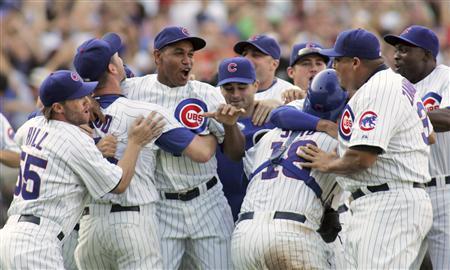
"Yes, we would have liked the great big happy Hollywood ending," says John Scheinfeld, currently putting the finishing touches on his feature-length Cubs documentary. "But as Bob Costas said to me when I interviewed him after the season, he said, 'You know, in many ways this is a more Cub-like ending.'"
The film, which will premiere June 12 at the Chicago Theatre, is called "We Believe," arguably the most detailed and ambitious of the Cubs documentaries that have been made to date. The words in the title will have to continue to carry the implied asterisk.
We Believe, In Spite of Everything.
We Believe, Though It Probably Would Be Easier If We Didn't.
We Believe, Aren't We the Fools?
Working at an editing company on North State Street, Scheinfeld -- who won acclaim for "The United States vs. John Lennon" -- has been cutting his movie since December and worrying, a little, about one question: "Given what happened in October," he says, "how do I end it in a way that people aren't going to want to go out and slit their wrists? I think I've found a way to do that."
He won't specify, except that he does plan to go out on Bruce Springsteen's "Land of Hope and Dreams." It surely helps that the film was never designed to be a season-in-the-life sports chronology. Instead, in the half-dozen segments I've seen during a couple of interviews, it plays like a valentine to the team, its city and the undeniably special relationship between the two, however maddening that may be to Sox fans.
"It's set against the landscape of the 2008 season, but it isn't really about that," Scheinfeld says.
So helicopters soar over Wrigley and Chicago. Cameras, which would gather more than 220 hours of footage, poke into the field's nooks and crannies. Vintage Cubs film gets new life. Frank Sinatra sings exactly the song you would expect, but, to Scheinfeld's credit, Ronnie Wicker and his exasperating wheeze will be nowhere in sight.
Bonnie Hunt talks about Chicago as "a giant Mayberry." George Will credits Chicagoans' capacity for optimism to their prairie location. Joe Mantegna wonders what would have happened if his parents had been Yankees fans instead.
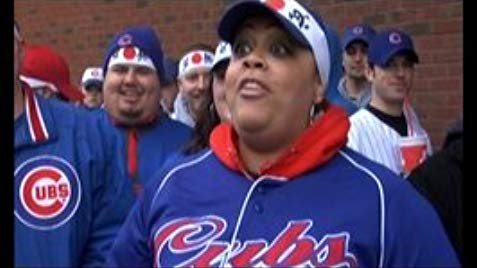
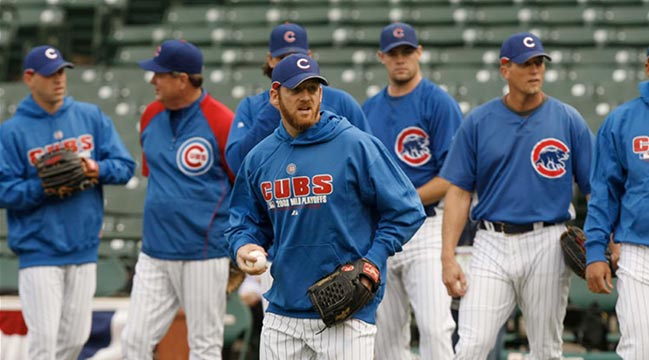
To set it apart from previous Cubbie homages, there are also plenty of less well-known fans, local writers, the members of Cubs management who, along with Major League Baseball, approved the project. Scheinfeld interviews eight players -- Ryan Theriot, Mark DeRosa, Kerry Wood, Geovany Soto, Ryan Dempster, Derrek Lee, Ted Lilly and Kosuke Fukudome -- at various points during the year and gives each a sort of chapter.
And the filmmaker talked to Roman Catholic Cardinal Francis George, thinking he'd get some general thoughts on the nature of faith that he could tie to the Cubs in the editing room. Instead, he got the very specific thoughts of a lifelong Cubs fan who is, therefore, an expert on the subject twice over.
As he recounts that interview, in the same January week in which it took place, Scheinfeld has the glow of a man looking at a gold nugget in his pan:
"Cardinal George said it's not dissimilar to eschatological faith, which is sort of 'next year in Jerusalem.' It's sort of, 'Jesus will be coming back at one point.' He said, 'We know it's going to happen, but we don't know when.'"
In other words, wait till next year is as applicable in the pews as it is in the bleachers.
"We were skeptical at first," says Crane Kenney, the Cubs chairman. "John's first meeting with me, I just said, 'No way.' We took the position that we're not in the business of granting anyone access for movie efforts."
But Scheinfeld had local ties. He grew up in Highland Park to age 6, earned a master's degree from Northwestern's radio/television/film department. He and Kenney had friends in common. He had made, as the crowning project to date in a long career, the well-received Lennon film, and Kenney was impressed by the way Scheinfeld "developed Lennon as a full person, some negative, some positive, but certainly human."
The filmmaker wanted to make the movie in Chicago, working with local crews and a local editor, rather than be, as he says, "a Hollywood carpetbagger."
And he was persistent. Scheinfeld recalls pointing to a picture, mounted in Cubs offices, of early 20th Century Cubs fans in a tree trying to peer over the Wrigley wall. That's the feeling I want to capture, he told Kenney.
ABOUT THE FILMMAKERS
Biography
JOHN SCHEINFELD | Director/Writer/Producer
Emmy and Grammy nominee John Scheinfeld is a respected director, writer and producer of documentaries, bringing a broad spectrum of experiences and interests to pop culture, music, historical and spiritual projects for broadcast, cable and theatrical exhibition. Most notably, Scheinfeld directed, wrote and produced the feature film documentary The U.S. vs. John Lennon. It was an official selection of the Venice Film Festival, the Telluride Film Festival, the Toronto International Film Festival and the London Film Festival and was subsequently released in theaters worldwide and on DVD.
On the heels of a Grammy nomination for producing 2005’s Beautiful Dreamer: Brian Wilson and the Story of SMiLE, Scheinfeld directed, wrote and produced the feature-length documentary Who Is Harry Nilsson (And Why Is Everybody Talkin' About Him)? The film had its world premiere at the Santa Barbara International Film Festival, and was also an official selection of the Seattle International Film Festival and Mods and Rockers Film Festival. The film will see worldwide distribution in 2010.
Scheinfeld is also completing production on Heaven, a compelling, inspiring and thought-provoking documentary film about how the world’s foremost religions view Heaven and how certain people/groups within those religions live their lives to get there. He also finished The Legendary Bing Crosby, a musical celebration of the iconic singer. The special premiered on public television stations across the country in February 2010 and will be distributed in international markets soon thereafter.
In partnership with David Leaf, Scheinfeld produced an 8-part/fourhour documentary, Norman Lear’s TV Revolution, distributed by Sony as well as a 5-part miniseries for BRAVO, The 100 Greatest Television Characters.
Previously, Scheinfeld wrote, produced and directed Electric Youth: Teen Stars in the Music Business, a 2-hour special for A&E for which he received an Emmy nomination as writer.
In addition, he wrote, produced and directed documentaries on the Bee Gees, Nat King Cole, Bob Hope, Norman Lear, Dean Martin, the Marx Brothers, Bette Midler, Ricky Nelson, Peter Sellers, Frank Sinatra, Andy Williams and Jonathan Winters as well as the MYSTERIES series for TLC (Mysteries of The Sphinx, Mysteries Of Stonehenge and Mysteries Of Noah And The Flood and Mysteries Of Easter Island).
Biography
CHRISTOPHER CLAEYS | Editor and Producer
Christopher Claeys received his Bachelors Degree in Radio/TV/Film from Northwestern University. After graduating in 1977, Chris joined the post-production group at FilmFair/Chicago. In 1980, Chris joined Edit/Chicago, and in 1984, he partnered with Tim McGuire’ and his fledgling editorial company, Cutters Inc., where Chris has made his home ever since. Today, Chris is a Senior Editor/Senior Partner and Vice-President of Cutters, Inc.
A veteran commercial editor whose vast experience has him working in many genres (including comedy, comedy-dialogue, dialogue and storytelling commercials), Chris is often called upon to edit and postproduce large and/or complex spot packages that require a high degree of organization, coordination and guidance. He has played a significant role in building Cutters into an amorphous, collaborative group that keeps egos and politics in check. This methodology is visible from the top down.
Recent commercial work includes spots for Disney, Kellogg's, DiGiorno, Allstate, and Hallmark for director's such as: Tarsem, Kinka Usher, Gregor Nicholas, Neil Tardio Jr, and James Gartner. Over the course of his career, Chris has cut film for such notable directors as: Michael Bay, Martin Granger, Christopher Guest, Dan Levinson, Vadim Perelman, Rob Pritts, and Kevin Smith.
WE BELIEVE is the first feature length documentary edited by Chris and he was delighted to be working with long-time friends Rich Christian and John Scheinfeld.
Biography
RICHARD C. CHRISTIAN, Jr. | Director of Photography and Producerr
Rich Christian founded Sedgwick Productions in 1983. Having worked for Encyclopedia Britannica and Cablevision and the commercial production house Film Fair, Christian made Sedgwick Productions’ focus documentary films, as well as marketing films for advertising agencies, larger corporations, educational institutions, and non-profit organizations. Sedgwick Productions provides services for Northwestern University, BP, United Stationers, and a host of other clients. Rich Christian is an award winning director and director of photography. His work has aired on PBS, The Discovery Channel, TLC, Super Station WGN, CNN, the BBC, and most recently the Big Ten Network. He has shot in nearly all of the 50 states, and in countries including China, the United Kingdom, Italy, France, Mexico, Costa Rica, Belize, and Canada.
Other recent work includes documentaries with the Experimental Aircraft Association for AirVenture, the world’s largest air show, which have aired on the Discovery Networks. This work has honored him with Telly Awards two years running. As a pilot, Rich also enjoys flying and aerial production, and has captured much of the skyline of Chicago. He directed and shot the award winning documentary Skyline Chicago, which was aired on PBS.
Ever since his work pursuing his MFA at Northwestern, Rich has understood the value of a team. He was thrilled to work with Director John Scheinfeld, and editor Chris Claeys, fellow students from Northwestern on WE BELIEVE. Both friends helped him in part with his thesis film on the Organic Theater Company, which included actors Joe Mantegna and Denis Franz in 1977.
Rich is married to Circuit Court of Chicago Judge Debra Walker. His oldest son Dan Christian is studying photography at Minneapolis College for Art and Design. Rich and Debra have 2 children, Colleen, 7, and Carlton, 5.
Biography
TIM MCGUIRE | Producer
Cutters, Inc. President and Founder Tim McGuire graduated from the University of Illinois, Chicago. He began his career in the film business as a gofer, worked his way up the ranks, and eventually found his niche as an editor. Tim worked at two film editorial companies, The Film Place and The Reel Thing before opening Cutters in 1980. The fledgling company quickly worked on several high profile campaigns for DDB/CHICAGO, whose client base included Anheuser Busch, McDonald’s, Wheaties, Shasta, and Helene Curtis, just to name a few. Among Tim’s most memorable spot projects are the Wheaties “What the Big Boys Eat” campaign, Shasta’s “I Want a Pop” campaign and McDonald’s “First Light.” The Wheaties and Shasta campaigns earned Tim a Clio, and he was honored with a Cannes Lion for his work with McDonald’s.
By 2001, the Cutters family of companies had grown to include SOL/design and Another Country audio, rounding out the full spectrum of post-production services. Tim left editing to assume a full-time role overseeing the growth of all three companies, including expanding Cutters into the Los Angeles marketplace. In the fall of 2008 the company opened Dictionary Films a production company to complete their circle of services. As can be seen in all of Tim’s endeavors, it’s his passion that drives him, and it’s passion that fuels every element of Cutters.

More Background On WeBelieveTheMovie.com
For Chicago Cubs fans, loyalty has never been measured solely by championships. It has been measured by generations of families attending games together, by unwavering optimism despite decades of heartbreak, and by the belief that next season could finally be the one. WeBelieveTheMovie.com was created to promote and document We Believe, the 2009 feature documentary that explored this remarkable relationship between the city of Chicago and one of baseball's most beloved franchises. The restored website now serves as a historical archive of the film, preserving information that might otherwise have disappeared as promotional sites from the late 2000s gradually vanished from the web.
Rather than functioning as a typical movie marketing site, WeBelieveTheMovie.com evolved into a resource documenting the production, history, cast, media coverage, and cultural importance of the documentary itself. Visitors discover not only information about the film but also a snapshot of Chicago baseball culture during one of the most anticipated seasons in Cubs history.
A Documentary Built Around the 2008 Chicago Cubs
The documentary We Believe was conceived during an extraordinary moment in Cubs history. The 2008 Major League Baseball season marked the 100th anniversary of the Cubs' 1908 World Series championship, the last title before their famous championship drought finally ended in 2016.
Director John Scheinfeld, whose previous work included the acclaimed documentary The U.S. vs. John Lennon, approached Cubs executives with an ambitious idea. Instead of creating another highlight reel or season recap, he wanted to produce a feature-length documentary examining why Cubs fans remained so passionate despite decades without a championship.
Initially, the Cubs organization hesitated to grant filmmakers unprecedented access to players and team operations. After reviewing Scheinfeld's previous work and creative vision, however, club executives agreed to participate, giving the production team extensive behind-the-scenes access throughout the 2008 season.
That cooperation became one of the defining strengths of the film.
More Than a Baseball Documentary
One of the recurring themes throughout both the documentary and the website is that We Believe is not simply about baseball.
Instead, it explores:
- Chicago history
- Immigration
- Family traditions
- Faith
- Community identity
- Hope
- Generational loyalty
The Cubs become the thread connecting these larger stories.
Rather than asking why the Cubs had not won a World Series, the filmmakers asked a far more interesting question:
Why do millions of people continue loving this team regardless of the outcome?
This broader perspective distinguished the film from earlier Cubs documentaries, many of which focused primarily on specific seasons or famous moments in franchise history. Reviewers frequently noted that We Believe attempted to explain Cubs fandom as a cultural phenomenon rather than simply recounting baseball statistics.
Extensive Access to the Cubs Organization
Production officially began during Spring Training in Mesa, Arizona, in February 2008.
The filmmakers interviewed numerous players multiple times throughout the season, capturing their perspectives:
- before Opening Day
- during the All-Star break
- after the season concluded
This approach allowed audiences to see how players' attitudes evolved during the emotional highs and lows of an entire baseball season.
The production ultimately accumulated:
- more than 220 hours of footage
- extensive interviews
- behind-the-scenes clubhouse access
- practice sessions
- game-day preparations
- more than a dozen games at Wrigley Field
The resulting documentary combines these contemporary interviews with historical material to create a much broader portrait of the Cubs organization than a conventional sports film.
Extraordinary Historical Research
Perhaps the most impressive aspect documented on WeBelieveTheMovie.com is the enormous historical research effort undertaken by the filmmakers.
Researchers searched archives across the United States, including:
- Library of Congress
- National Archives
- Chicago History Museum
- University collections
- private memorabilia collections
- neighborhood historical societies
Among their discoveries were:
- the earliest known moving picture footage of a Cubs game from 1909
- rare footage of Chicago dating back to 1897
- previously unseen World Series film
- historic Wrigley Field footage from multiple decades
- vintage photographs
- original game programs
- newspaper archives
Much of this material had never appeared in previous documentaries.
These archival discoveries allowed the film to illustrate more than a century of Cubs history using authentic visual records rather than relying solely on narration or still photography.
Celebrating Chicago Itself
Unlike documentaries focused exclusively on sports, We Believe dedicates considerable attention to Chicago.
The city becomes almost another character.
The website describes sweeping aerial photography of:
- downtown Chicago
- Lake Michigan
- neighborhood streets
- Wrigleyville
- historic architecture
- the interior spaces of Wrigley Field rarely seen by ordinary fans
The film also explores major events that shaped Chicago's identity, including immigration and rebuilding after the Great Chicago Fire, drawing parallels between the city's resilience and the enduring optimism of Cubs supporters.
Some reviewers praised this broader civic perspective, while others felt portions of the documentary resembled a travel film. Even critics generally acknowledged that the cinematography showcased Chicago beautifully and reinforced the emotional connection between the city and its baseball team.
Notable People Featured in the Documentary
One of the documentary's greatest strengths is the wide variety of people interviewed. Rather than relying exclusively on baseball players, the filmmakers assembled a cross-section of individuals whose lives intersected with the Cubs in different ways.
The website highlights interviews with:
- Hall of Fame Cubs legends including Ernie Banks, Ryne Sandberg, Billy Williams, and Ron Santo
- then-current Cubs players such as Ryan Dempster, Derrek Lee, Ted Lilly, Geovany Soto, Mark DeRosa, Ryan Theriot, Kosuke Fukudome, and Kerry Wood
- Cubs manager Lou Piniella
- General Manager Jim Hendry
- Cubs Chairman Crane Kenney
- Major League Baseball Commissioner Bud Selig
Beyond baseball, the film features well-known Chicago personalities and nationally recognized figures including:
- broadcaster Bob Costas
- actor Joe Mantegna
- actress Bonnie Hunt
- actor Dennis Franz
- comedian Jeff Garlin
- musician Billy Corgan
- blues legend Buddy Guy
- Playboy founder Hugh Hefner
- journalist Michael Wilbon
- columnist George Will
- bestselling author Scott Turow
- Chicago Mayor Richard M. Daley
- Cardinal Francis George
Rather than appearing merely as celebrity cameos, these interviews help explain why Cubs fandom occupies such a unique place within American sports culture. Many discuss childhood memories, family traditions, and the emotional investment that accompanies supporting the team.
Gary Sinise as Narrator
Another notable aspect of the production is its narration by Gary Sinise.
A Chicago-area native, Sinise was already widely respected for performances in Forrest Gump, Apollo 13, CSI: NY, and numerous charitable initiatives supporting military veterans. His calm, thoughtful narration complements the documentary's reflective tone.
Rather than employing an overly dramatic sports-announcer style, Sinise guides viewers through the history of Chicago and the Cubs with a measured approach that emphasizes emotion over spectacle.
His involvement also reinforced the film's strong Chicago connections.
Steve Goodman and "Go Cubs Go"
One of the documentary's most emotional storylines centers on singer-songwriter Steve Goodman, whose relationship with the Cubs remains legendary.
Goodman is remembered for writing:
- Go Cubs Go
- A Dying Cub Fan's Last Request
Diagnosed with leukemia as a young man, Goodman spent years hoping to witness a Cubs championship before his death in 1984.
Although he never saw the Cubs win the World Series, his music became permanently associated with the franchise. "Go Cubs Go" is played after every Cubs home victory at Wrigley Field and has become one of baseball's best-known victory songs.
The documentary traces Goodman's life while using his story as a metaphor for the perseverance shared by generations of Cubs fans. The website describes this portion of the film as one of its most moving narrative threads.
Community Participation
Unlike many professional sports documentaries, We Believe actively invited participation from ordinary fans.
One initiative highlighted on the website involved a "Cubs Love Stories" contest organized with WGN Radio.
Hundreds of couples submitted stories describing how the Cubs had influenced their relationships or even brought them together. Winning entrants Chris and Sue Jones became part of the documentary, illustrating how baseball traditions often extend well beyond the ballpark.
The filmmakers also invited Chicago-area musicians to submit original songs inspired by Chicago or the themes explored in the film. Fans voted online for their favorite composition, and the winning selection, "Waltz in the Ashes" by Inchworm, became part of the soundtrack.
Another innovative campaign allowed supporters to purchase the opportunity to have their own names—or those of loved ones—appear in the film's closing credits. The website compares this to purchasing commemorative bricks outside Wrigley Field, while noting that part of the proceeds benefited charitable causes.
A Distinctive Production Philosophy
The filmmakers repeatedly emphasized that We Believe was intended to be a Chicago production.
Financing came from local investors.
The production staff largely consisted of Chicago professionals.
Editing took place at the renowned post-production company Cutters.
Visual effects were produced by SOL Design, while audio post-production was handled by Another Country.
Director of Photography Richard Christian and his company Sedgwick Productions contributed extensive experience filming Chicago landmarks and documentaries.
This commitment to local talent reinforced the authenticity of the project. Rather than appearing as an outside production examining Chicago from afar, the film reflects the perspective of people with deep roots in the city.
The Website's Organization and Features
As preserved today, WeBelieveTheMovie.com functions as both a promotional archive and an informational resource.
Visitors encounter sections devoted to:
- the documentary trailer
- production history
- filmmaker biographies
- featured cast members
- historical essays
- press coverage
- production photographs
- reviews
- DVD information
- restored archival content
- stories about the preservation of the original website
The site's navigation remains straightforward, reflecting web design practices common in the late 2000s. Rather than emphasizing interactive features, social media feeds, or streaming video integration, the emphasis is on providing lasting documentation of the film and preserving material that might otherwise have disappeared from the internet.
The restored version also acknowledges that the original promotional website has been reconstructed using archived pages together with independently researched historical material, transforming it from a temporary movie-marketing site into a lasting historical reference.
Critical Reception and Reviews
When We Believe premiered in 2009, reviewers generally agreed that it differed from previous documentaries about the Chicago Cubs. Instead of concentrating exclusively on memorable games or legendary players, the film sought to explain why Cubs fandom had endured through decades without a World Series championship.
Coverage in the Chicago Tribune emphasized that the film was "not really about" the 2008 season itself. Rather, critic Steve Johnson described it as a love letter to Chicago, its people, and the unique emotional bond between the city and its baseball team. He noted that while the production had hoped for the perfect ending—a World Series championship during the centennial year of the Cubs' last title—the team's playoff collapse actually reinforced one of the documentary's central themes: Cubs fans continue believing regardless of the outcome.
NBC Chicago similarly described We Believe as an uplifting exploration of "the extraordinary love affair between Chicago and its Cubs," highlighting its unprecedented access to the organization and its combination of celebrity interviews, historical footage, and fan stories. The station promoted the documentary's premiere as a must-see event for baseball enthusiasts and longtime supporters of the club.
Another favorable assessment came from Chicago Cubs Online, which praised the film's cinematography, soundtrack, and ability to balance Cubs history with the broader history of Chicago itself. The reviewer singled out the inclusion of ordinary fans alongside celebrities and baseball personalities, arguing that this approach helped distinguish the documentary from earlier productions focused primarily on statistics and famous games.
Audience Reviews
Viewer reactions reflected the same themes found in professional reviews.
Many Cubs fans appreciated the emotional approach, describing the documentary as something they watched repeatedly during baseball's offseason. Numerous viewers praised the historical footage, interviews, and sweeping photography of Wrigley Field and Chicago.
Several Amazon reviewers characterized the film as essential viewing for lifelong Cubs supporters, particularly those who had inherited their fandom through family traditions.
Some reviewers, however, offered constructive criticism.
A common observation was that the documentary attempted to cover several topics simultaneously:
- Cubs history
- Chicago history
- the 2008 baseball season
- famous fans
- Steve Goodman's life
- immigrant history
- Wrigley Field
- broader civic identity
Because of this ambitious scope, some viewers felt that important baseball eras—including the 1984 Cubs, the 2003 postseason, and several legendary players—received less attention than expected.
Even many of these more critical reviewers concluded that the documentary remained worthwhile because of its sincerity and emotional portrayal of Cubs fandom. Rather than serving as a definitive history of the franchise, they viewed it as a celebration of what it means to continue believing despite repeated disappointment.
Awards and Recognition
Unlike many sports documentaries released through major studios, We Believe was not produced primarily as an awards-season contender. Its significance instead stems from the reputation of the filmmakers and the access they received from Major League Baseball and the Chicago Cubs.
Director John Scheinfeld already possessed an impressive résumé before beginning the project. His documentary The U.S. vs. John Lennon had screened at prestigious international film festivals including Venice, Toronto, Telluride, and London, establishing him as one of America's leading documentary filmmakers. His earlier work had also earned Emmy and Grammy nominations, lending considerable credibility to the Cubs project.
The production itself achieved an important distinction by becoming the first theatrical documentary produced with the full cooperation of both the Chicago Cubs organization and Major League Baseball. This level of institutional support granted filmmakers access rarely afforded to independent sports documentaries and contributed significantly to the film's authenticity.
Historical Significance After the 2016 World Series
One of the most fascinating aspects of We Believe today is how dramatically history changed only seven years after its release.
When audiences first saw the documentary in 2009, the Cubs had endured a championship drought stretching more than a century. Their identity as baseball's lovable underdogs shaped nearly every aspect of the film.
In 2016, however, the Cubs defeated the Cleveland Indians in an unforgettable seven-game World Series, ending one of the longest championship droughts in professional sports.
That victory transformed We Believe into something more than a documentary about contemporary baseball. It became a time capsule preserving the mindset of Cubs fans before the championship finally arrived.
Modern viewers therefore experience the documentary differently than audiences did in 2009. Instead of wondering whether the Cubs would ever win another World Series, they watch knowing that the faith celebrated throughout the film was ultimately rewarded.
This historical perspective has given both the documentary and its companion website lasting value for baseball historians and Cubs fans alike.
The Role of WeBelieveTheMovie.com Today
Like many movie promotional websites created during the early years of broadband internet, the original WeBelieveTheMovie.com might easily have disappeared after the DVD's commercial life ended.
Instead, the restored version functions as a digital archive preserving:
- production notes
- filmmaker biographies
- historical essays
- press coverage
- cast information
- promotional materials
- behind-the-scenes stories
- photographs
- historical research
- reviews
The preservation effort ensures that future generations can understand not only the documentary itself but also the context in which it was produced.
This archival role has become increasingly important as older entertainment websites disappear because of expired domains, changing content management systems, or discontinued hosting services. The site demonstrates how preservation projects can extend the life of cultural materials long after their original promotional purpose has ended.
Popularity and Continuing Interest
Although We Believe never achieved blockbuster commercial success, it has maintained a loyal following among Cubs supporters.
Interest in the documentary typically increases during several occasions:
- Opening Day each season
- anniversaries of the 2008 season
- retrospectives about Wrigley Field
- documentaries celebrating Chicago sports
- anniversaries of the 2016 World Series championship
Collectors also continue seeking physical DVD copies, and discussions of the film periodically appear on baseball forums, fan communities, and social media whenever conversations turn to the emotional history of Cubs fandom.
Because the documentary emphasizes timeless themes—family, optimism, civic pride, and perseverance—it has remained relevant long after the specific events of the 2008 season faded into history. Its enduring appeal lies less in documenting wins and losses than in explaining why millions of people continued believing long before the Cubs finally rewarded that faith.
Legacy and Lasting Cultural Importance
Today, WeBelieveTheMovie.com serves a purpose that extends well beyond promoting a single documentary. It has become a digital archive preserving a unique moment in both Chicago history and Major League Baseball. While many promotional websites disappear shortly after a film leaves theaters or DVD sales decline, this site continues to provide historical context for a documentary that captured the emotions of Cubs fans before the franchise's long-awaited championship in 2016.
The site's preservation is particularly valuable because it documents not only the finished film but also the extensive work that went into creating it. Visitors can learn about the filmmakers, production timeline, archival research, interviews, music, and restoration efforts that made We Believe one of the most ambitious documentaries ever produced about the Chicago Cubs.
Equally important is its preservation of press coverage from the film's release. Contemporary newspaper articles, reviews, and interviews help modern readers understand how the documentary was received when expectations surrounding the Cubs remained defined by hope rather than championship celebrations. Looking back after the Cubs' World Series victory gives the documentary an entirely different emotional context, transforming it into a historical record of an era that has now passed.
For baseball historians, documentary enthusiasts, and Chicago sports fans, WeBelieveTheMovie.com has become more than a surviving promotional website. It functions as an online museum exhibit documenting one of baseball's most famous fan bases and the filmmakers who attempted to explain why generations continued believing despite decades of disappointment.
Ownership and Website Restoration
The restored version of WeBelieveTheMovie.com differs from the original promotional site that accompanied the documentary's theatrical release.
According to the website, the current version combines archived material from the original 2009 website with additional independently researched historical information.
This approach reflects a growing trend in digital preservation, where historically significant websites are reconstructed after their original hosting environments disappear. Rather than merely reproducing archived pages, the restored site supplements them with additional context that helps readers understand both the documentary and its lasting place in Cubs history.
Why the Website Still Matters
Many sports documentaries are forgotten within a few years of their release. WeBelieveTheMovie.com has endured because it documents something larger than a single baseball season.
Its continuing relevance stems from several factors:
- It chronicles one of the most famous fan cultures in professional sports.
- It preserves rare historical photographs and archival discoveries discussed during production.
- It documents how Chicago's identity became intertwined with its baseball team.
- It provides insight into the creative process behind a major independent documentary.
- It captures the emotional atmosphere surrounding the Cubs before their historic 2016 championship.
- It preserves information that otherwise might have been lost as promotional websites disappeared.
For younger Cubs fans who experienced only the championship era, the site offers valuable perspective on why previous generations remained devoted despite more than a century without a World Series title. For longtime supporters, it serves as a reminder of the optimism, traditions, and family memories that defined Cubs fandom long before the championship drought ended.
WeBelieveTheMovie.com stands as an unusually successful example of digital preservation. What began as the official promotional website for the 2009 documentary We Believe has evolved into an enduring historical resource documenting not only the film itself but also the extraordinary relationship between Chicago and the Chicago Cubs.
The documentary distinguished itself by combining unprecedented access to the Cubs organization with extensive historical research, remarkable archival discoveries, interviews with players, celebrities, historians, and ordinary fans, and breathtaking cinematography of Chicago and Wrigley Field. Rather than simply recounting wins and losses, it explored broader themes of faith, perseverance, civic pride, family, and tradition.
The website preserves that legacy by collecting production information, filmmaker biographies, cast profiles, media coverage, historical essays, and restoration efforts into a single archive. Its continued availability ensures that one of the most thoughtful documentaries ever produced about the Cubs remains accessible to future audiences.
Perhaps the greatest testament to both the film and the website is that they remain compelling even after history changed. When We Believe premiered, the Cubs were still searching for the championship that had eluded them since 1908. Today, viewers watch knowing that the impossible eventually became reality. That knowledge transforms the documentary into something even more meaningful—a portrait of hope before hope was finally fulfilled.
For Cubs fans, Chicago historians, baseball enthusiasts, and documentary lovers alike, WeBelieveTheMovie.com continues to offer a rich and engaging record of one of baseball's most enduring stories.